How to use JLPT mock exams the right way | yomeru.ai

Shuhei Nakamura
2026/03/07

The JLPT is the single most recognized Japanese language certification in the world — and for good reason. It structures your learning path, adds points toward Japan's Highly Skilled Professional visa, and serves as the standard hiring filter at Japanese companies. But knowing the material is only half the battle. To actually pass, you need to practice taking the test. That is where mock exams come in — and most learners use them wrong.
Why the JLPT Matters
The five JLPT levels — N5 through N1 — give learners a concrete roadmap from basic comprehension to near-native reading and listening ability. N5 and N4 confirm foundational skills. N3 is the bridge where Japanese starts feeling usable. N2 is the professional threshold: the level most Japanese employers require. N1 opens premium roles in consulting, finance, law, and media, and is legally required for foreign medical professionals seeking Japanese licensure.
Beyond career doors, the JLPT carries real immigration weight. Japan's points-based Highly Skilled Professional visa awards 15 points for N1 and 10 points for N2 — often the difference between qualifying and falling short. JLPT certificates never expire, making every level you pass a permanent credential.
| Level | Study Hours (est.) | What It Unlocks |
|---|---|---|
| N5 | 325–600 | Foundation confirmed, basic daily Japanese |
| N4 | 575–1,000 | Elementary comprehension, EPA caregiver eligibility |
| N3 | 950–1,700 | Intermediate bridge, everyday reading and conversation |
| N2 | 1,600–2,800 | Professional hiring threshold, +10 HSP visa points |
| N1 | 3,000–4,800 | Full professional fluency, medical licensing, +15 HSP visa points |
What Most Learners Get Wrong
Mock exams are diagnostic tools, not just score generators. Here are the mistakes that undermine their value:
- No timer. Taking a practice test without time pressure gives you a false sense of readiness. The real JLPT is relentlessly timed — especially the reading section.
- Score-only review. Checking whether you passed and moving on wastes 90% of the mock exam's value. The real learning happens in the question-by-question review.
- Back-to-back cramming. Taking three mock exams in a weekend teaches you nothing new. You need study time between mocks to address the gaps each one reveals.
- Skipping listening. Many learners practice only reading and grammar because listening requires audio and feels inconvenient. On the real test, listening is worth a full third of your score — and has its own pass minimum.
The Right Way to Take a Mock Exam
Step 1: Simulate Real Conditions
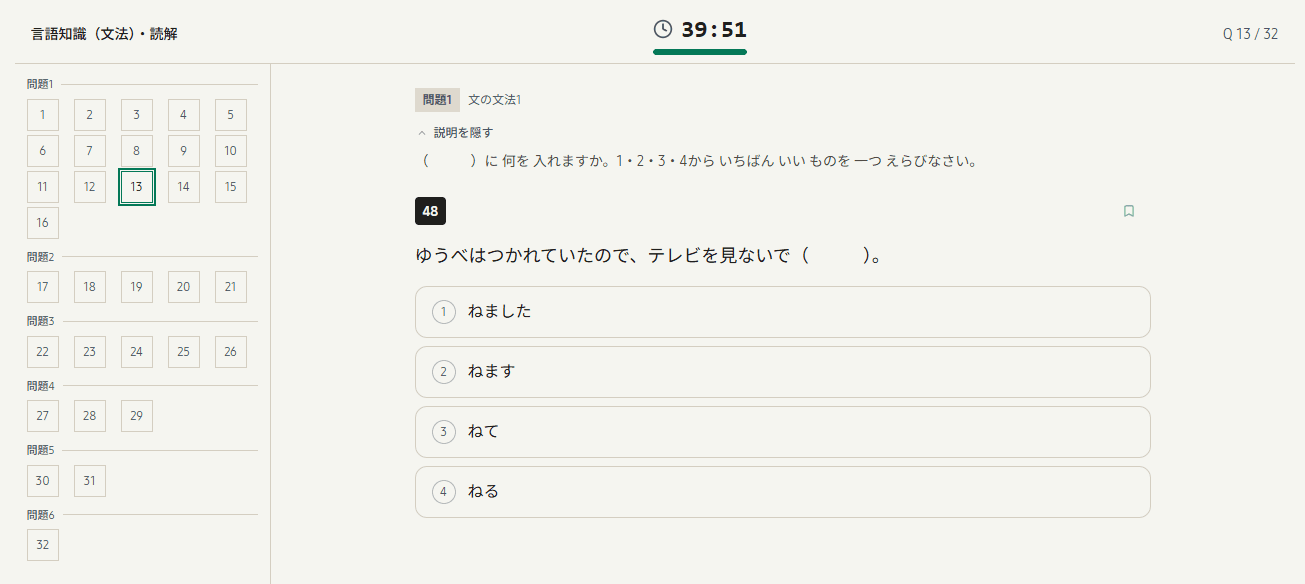
Sit down for the full test in one session. Set the timer. No pauses, no dictionary, no phone. If the mock exam has a strict audio mode (play once, no rewind), use it. The goal is to replicate the pressure and pacing of exam day so your score reflects your real ability.
Step 2: Score with Official Criteria
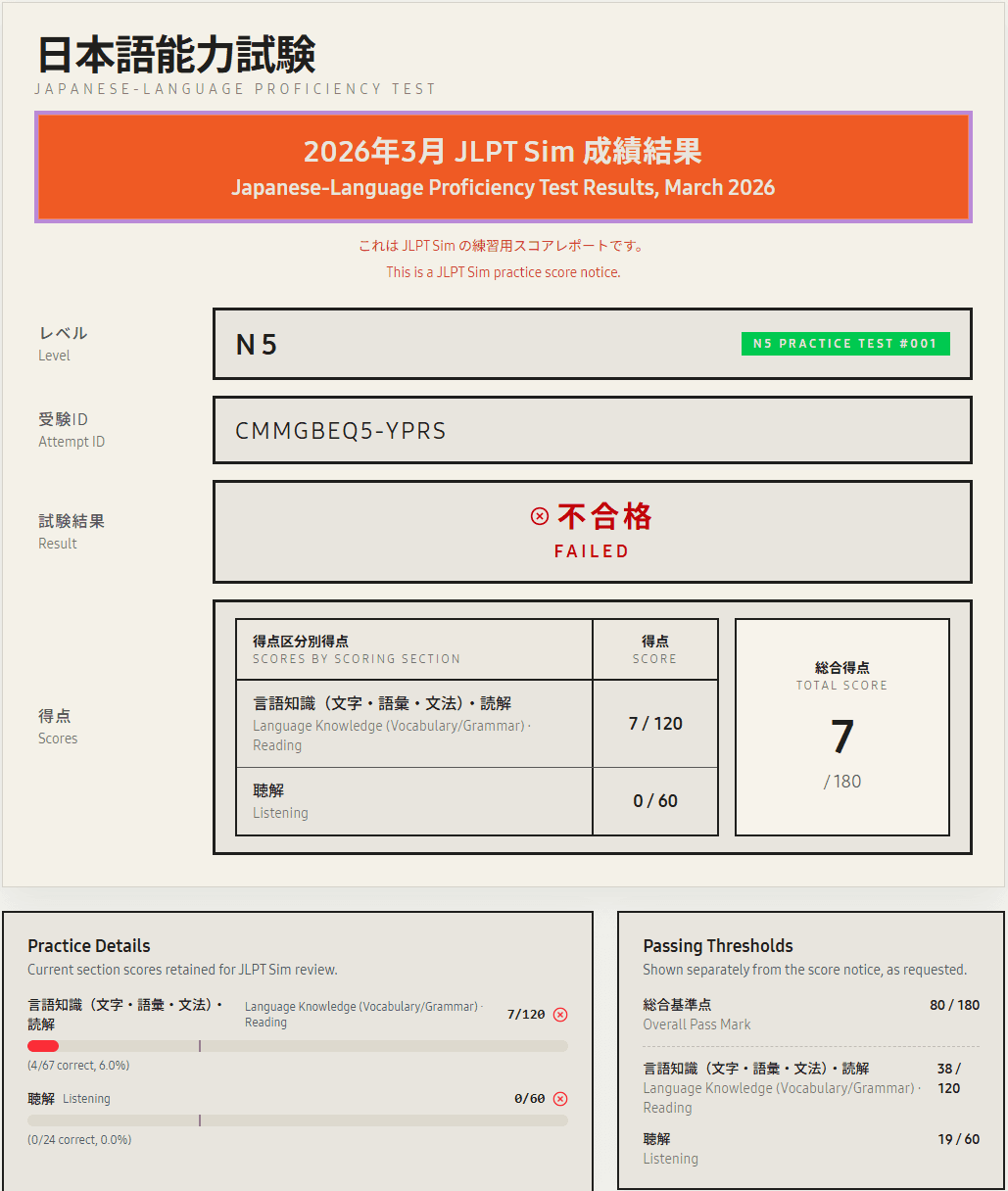
The JLPT uses sectional scoring — you need to hit a minimum in every section, not just the overall total. A perfect vocabulary score cannot compensate for a failing listening score. When you review your results, check each section independently. Record your scores somewhere you can track them over time.
Step 3: Review Every Question
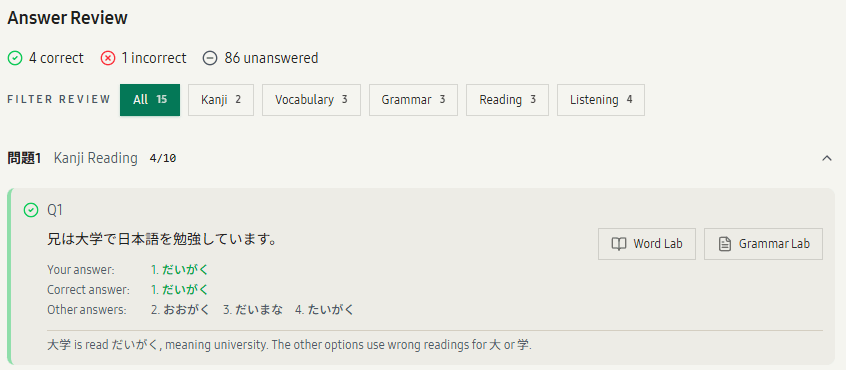
This is the most important step. Go through every question — not just the ones you got wrong. For each mistake, understand why the correct answer is correct and why your choice was wrong. For questions you got right but guessed on, treat them as mistakes too. Keep a simple error log: note the grammar point, vocabulary word, or reading skill that tripped you up.
Step 4: Study the Gaps Before Retaking
Your error log tells you exactly what to study next. If reading comprehension is dragging your score down, spend the next week doing focused reading practice. If listening is the weak section, increase your daily audio input — podcasts, news, shadowing. The mock exam identified the problem; now fix it before taking another one.
Step 5: Space Your Mock Exams
In the final two to three months before the test, take one mock exam every one to two weeks. Study targeted material between each mock. This spacing gives you time to absorb new material and measure whether your weak areas are actually improving. Taking mock exams daily yields diminishing returns — you end up memorizing specific tests rather than building real ability.
What to Look for in a Mock Exam
Not all practice tests are created equal. A good JLPT mock exam should:
- Match the real format — correct question types, section structure, and timing for your target level
- Include listening audio — reading and grammar alone cover only two-thirds of the test
- Provide explanations — every question should have a clear explanation so you can learn from mistakes during review
- Track your history — seeing your scores improve over time is motivating and lets you measure whether your study plan is working
Practice with JLPT Sim
If you are looking for a mock exam that checks all of these boxes, yomeru.ai's JLPT Sim offers full-length practice tests for all five levels. Each test mirrors the real JLPT with timed sections, authentic question formats, and listening audio with natural-sounding voices. After you submit, you get instant scoring with a full question-by-question review — and every past attempt is saved so you can track your progress.
Start Practicing the Right Way
Mock exams are not just practice runs — they are the most efficient diagnostic tool available to JLPT candidates. Every test you take generates a map of your strengths and weaknesses. Use that map. Study the gaps, space your attempts, and simulate real conditions every time. That is how mock exams translate into points on exam day.
Written by
Shuhei Nakamura
Japanese Language Educator
A Japanese language educator with over 15 years of teaching experience, Shuhei specializes in reading-focused approaches to language acquisition. Drawing from his background in applied linguistics and immersive learning methods, he writes about practical strategies that help learners build real fluency through extensive reading and native content.